April 2022

F is for Fabada AsturianaΒ 

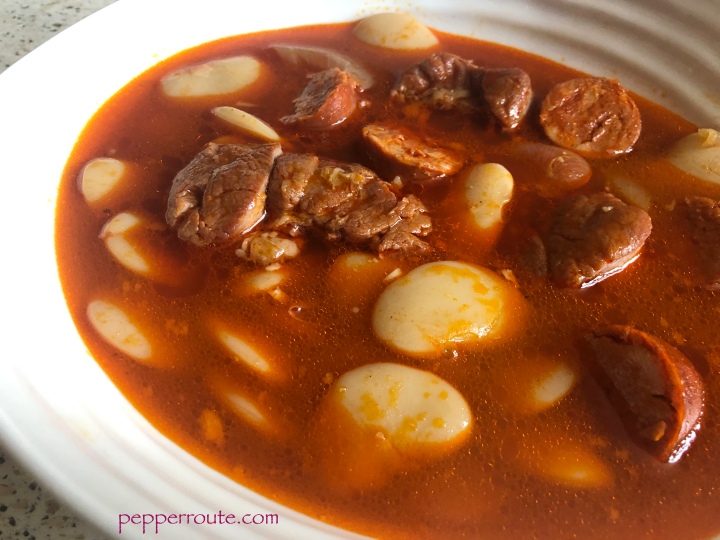
Fabada Asturiana is a rich pork and beans stew from the Asturias region of northern Spain. Asturias is a rugged mountainous region, and like most mountain food, fabada asturiana is simple and hearty. 

Traditionally, the type of beans used for this stew is fabes de la granja – beans of the farm. As it is fairly difficult to find them in the US, you can use any kind of large white beans. I have used Spanish flat white beans here.Β 

As with any old recipe, there are several variations going around, especially regarding the meat used. Different types of ham and bacon, chorizo and blood sausages were variously included. For this recipe, I have used ham hock, smoked bacon, slab bacon, and Spanish chorizo sausages. And believe me, it is one of the most flavorful stews I have ever tasted.Β 

The smoked paprika in the dish enhances the flavors of the chorizo. And the saffron gives it a distinctive color and flavor.

The stew is started in cold water and the flavors are concentrated over slow simmering.

Fabada Asturiana is served with crusty bread, whole wheat being the best.

F is for Fabada AsturianaΒ 

Difficulty:BeginnerServings:6 servings

Ingredients

Instructions

  1. Soak the beans in cold water, 8 hours prior to the time the stew is to be cooked.
  2. When ready to cook the stew, drain the beans and add them to a large pot.
  3. Add onions (halved), garlic (whole), paprika, saffron, ham hock (whole), two types of bacon (whole), salt and pepper, along with 10 cups of cold water to the pot.
  4. Bring the contents of the pot to a boil. Continue to cook on simmer for 1 hour.
  5. Check the liquid level of the pot; liquid should be sufficient to cover the ingredients. If required, add more water.
  6. Continue cooking for another 30 minutes.
  7. Add the chorizos to the pot. Continue cooking till the beans are soft and the liquid is thickened to the consistency of gravy, for about 30 minutes more.
  8. Check seasoning and adjust salt and pepper, if required.
  9. When ready, pick up the ham hock, slab bacon and chorizo out of the pot using a slotted spoon and place them on a chopping board. Cut the meat from the ham hock into large pieces, discarding the bone. Cut the slab bacon and chorizo into bite size pieces.
  10. Place the meat back in the pot with the beans.
  11. Serve hot along with thick slices of crusty bread.
Keywords:Bacon, Beans, Ham, Meat stew

E is for Γ‰touffΓ©eΒ 

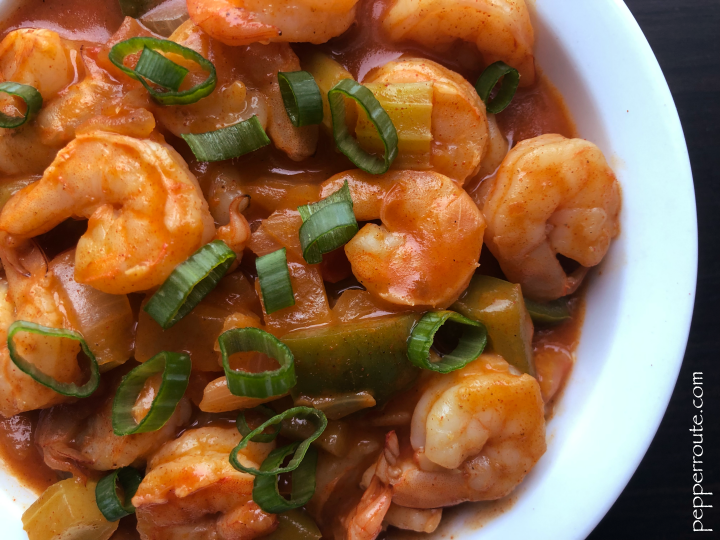
Γ‰touffΓ©e (pronounced ay-too-fay) is a popular dish in the Creole cuisine of Luisiana and especially New Orleans. Creole cuisine combines European, African and native American traditions and is one of the distinctive styles of cooking in the United States.

The word Γ©touffΓ©e means β€˜smothered’ in French. Smothering is a process of cooking anything in its own juices with minimum addition of extra liquid. This is a commonly used technique in Creole cooking.

The flavor base for an Γ©touffΓ©e is the β€˜holy trinity’ of Creole (and Cajun, a similar cuisine, also developed in Louisiana) cooking: onion, celery and green pepper. Diced into uniform size, they are sautΓ©ed in butter to get a dish started. Sometimes the trinity is enhanced with garlic, parsley, or shallots. 

They form the base for other Creole-Cajun dishes like jambalaya and gumbo as well.

Γ‰touffΓ©e can be made using different shellfish, though crawfish which are specific to Louisiana, are most often used. However, shrimp is an equally good replacement when crawfish are not available.

There are differences of opinion regarding the addition of tomatoes in an Γ©touffΓ©e. Also, about roux. Even when there is agreement on the inclusion of roux, opinion differs as to do so at the beginning or towards the end. This version includes tomatoes and a roux, introduced half way through the recipe.

Creole seasoning elegantly blends an array of flavors to come up with a perfectly balanced spice mix. Make this a staple in your spice cabinet, as you can use it for fish, chicken or vegetables.

Γ‰touffΓ©e is mostly served with cooked white rice, but you can try mashed potatoes as well.

To make the Creole seasoning, mix together: 2 tbsp paprika, 1 tbsp onion powder, 1 tbsp garlic powder, 1 tbsp dried thyme, 1 tbsp dried oregano, 1 tbsp black pepper, 1 teaspoon cayenne, and 1 teaspoon salt.

E is for Γ‰touffΓ©eΒ 

Difficulty:BeginnerServings:4 servings

Ingredients

Instructions

  1. Heat a pan over medium heat and add the butter.
  2. Add the onions, celery and back pepper. Cook till the onions turn transparent.
  3. Add the garlic and stir into the mix for 1 minute.
  4. Sprinkle the flour over the ingredients in the pan and stir well. Continue to cook for about three more minutes.
  5. Add the chopped tomatoes to the pan.
  6. Add the stock, Creole seasoning, and salt and pepper to taste. Continue to stir and cook till the liquid thickens. Simmer for 5 more minutes.
  7. Add the shrimp and continue to cook till the shrimp is fully cooked and turns pink, for another 5 minutes. Adjust seasoning if required.
Keywords:Creole, Etouffee, Seafood, Shrimp, Louisiana

D is for Dongnae Pajeon

Dongnae Pajeon (Korean scallion seafood pancakes) has its origin in the Dongnae region of Korea. Legend has it that the residents threw scallions that grew abundantly in the region, at the retreating Japanese army. Dongnae pajeon was created to honor that victory. And the dish was presented at the king’s table. 

Scallion seafood pancakes must be one of the most popular items in any Korean restaurant. However, the regular haemul pajeon differs from dongnae pajeon in that while scallions and seafood are mixed into the batter for the regular haemul pajeon, they are layered and crisped for the dongnae pajeon.

The batter is made from a combination of glutinous and non-glutinous flours. I have used equal quantities of rice flour and all-purpose flour to make the batter for this recipe.

You can use a variety of seafood in the dongnae pajeon. Clams, mussels, oysters, shrimp, squid, and scallops are all perfect for this dish. I have used shrimp and scallops for this version. 

Traditionally, minari, a green leafy herb sometimes known as water celery or chinese celery, is an ingredient in the dongnae pajeon. As the pajeon is very flavorful even without the minari, I decide to leave it out. If you want to, you can use watercress in its place.

Being around Koreatown in Manhattan, I’ve eaten many a pajeon over the years. And I have tried to perfect the recipe and the method of preparing it.

The secret is to get the batter to the right consistency of a thin pancake batter. Then you start going across the scallion pieces in lines, till you have almost covered them. Almost, but not quite.

Then you quickly lay out the seafood over the batter and follow up with another set of lines of batter over the seafood. A drizzle of oil over that, and cover and cook for two-three minutes when it will be time to turn the pajeon over. You are almost there!

Serve with dipping sauce on the side. 

To make the dipping sauce, mix together soy sauce (2 tbsp), rice vinegar (1 tbsp), mirin (1 tbsp), and gochujang, the Korean chili-soy paste (1 tbsp). If you prefer a less spicy dipping sauce, you can use any fermented soy paste instead of gochujang. On the other hand if you prefer it spicier, add a spurt of sriracha. 

D is for Dongnae Pajeon

Difficulty:AdvancedServings:8 servings

Ingredients

Instructions

  1. Sieve together the rice flour, all-purpose flour and baking powder.
  2. Cut the green parts of the scallions in long pieces, 5 to 7 inches long. All pieces need not be the same length.
  3. Cut the shrimp and scallops into small pieces.
  4. In a bowl, beat the egg together with soy sauce, rice vinegar, and gochujang. Add one and a half cups of water and mix well.
  5. Add minced ginger and garlic to the bowl. Season with salt.
  6. Add the flour mix to the bowl and mix well. Add more water if required, to make a thin pancake batter.
  7. Heat a griddle on the stove top, on medium heat. Oil the griddle.
  8. Lay down a handful of scallion pieces in parallel on the griddle.
  9. Start drizzling the batter in lines across the scallions till they are almost covered.
  10. Quickly place the chopped seafood on top of the batter.
  11. Repeat with another layer of batter on top of the seafood. Make sure you stir the batter before each use as rice flour tends to settle at the bottom.
  12. Drizzle a teaspoon of oil on top of the pajeon.
  13. Cover and cook for two-three minutes.
  14. Turn the pajeon over and continue to cook, uncovered.
  15. Check after two minutes. When sufficiently crisp, remove from the griddle and serve hot with dipping sauce.
  16. To make the dipping sauce, mix together soy sauce (2 tbsp), rice vinegar (1 tbsp), mirin (1 tbsp), and gochujang, the Korean chili-soy paste (1 tbsp).
Keywords:Dongnae Pajeon, Korean Seafood Pancake, Pancakes, Scallions, Seafood

C is for Caldereta

Caldereta is a delicious meat stew from Philippines, with a medley of vegetables slow cooked to perfection. The dish got its name from the word β€˜cauldron’ (caldero in Spanish), the pot in which the dish was cooked. Cooked on special occasions and holidays, it will add color to any table.

I used a mix of peppers for this dish, in addition to the potatoes and carrots. The balance of the flavors of meat, root vegetables and the peppers was perfect. Now I’m tempted to try other vegetable combinations in this recipe. Cauliflower and peas are definitely worth a try. 

Originated in the Castile and LeΓ³n region of Spain, caldereta used to be cooked with meat from sheep, common to the area. Later, due to the Spanish influences on Filipino cuisine, it came to be popular in Philippines, but with goat meat instead of sheep. Modern versions are made with beef or pork. 

The addition of olives along with tomato paste gives the dish a tangy twist while the peanut butter adds to the creaminess. The cheddar brings it all together but can be omitted if you prefer it simpler. 

Traditionally, caldereta was thickened with liver pate (paste) but many modern versions avoid liver due to the gamy flavor. You can add it to the dish if you like it.

You can also try adding cooked garbanzo beans or white beans to this dish for variety.

Caldereta is generally served with cooked white rice. 

C is for Caldereta

Difficulty:IntermediateServings:6 servings

Ingredients

Instructions

  1. Heat the oil in a largish pot, over medium heat. Add the potatoes and cook till lightly brown. Drain and keep aside.
  2. Add chopped onions and carrots to the pot. Season with salt and black pepper.
  3. Cook till onions are transparent. Add the garlic and sautΓ© for a minute.
  4. Add the beef pieces to the pot and cook, turning to brown them evenly.
  5. When the meat is browned, add the tomato paste and cook for two minutes, stirring the tomato paste well into the oil.
  6. Add the chopped tomatoes and chillies. Stir together and cook.
  7. When the liquid starts to dry up, add 1 and 1/2 cups of water.
  8. Cover the pot and lower the heat. Continue to cook till the beef is tender, about 90 minutes.
  9. Check for seasoning, adding salt and pepper as required.
  10. When the beef is done, add the potatoes to the pot. Add more water if required.
  11. When the potatoes are fully cooked, add the bell peppers and olives to the pot. Continue to cook for three minutes.
  12. Stir in the cheese evenly and allow it to melt.
  13. Check seasoning and serve hot with cooked white rice.

Notes

  • If you are using liver pate, add it to the pot just before the cheese and blend well.
Keywords:Stew, Meat, Meat stew, Peppers, Olives
Bouillabaisse

B is for Bouillabaisse

Fish soup, anyone? Likely, you may not get many responses to that. Change the name to Bouillabaisse and it becomes an inviting dish with all the allure of French cuisine! So much for the power of words!

For that is what bouillabaisse is. A basic broth with vegetables and seafood. 

The name is composed of two words meaning β€˜to boil’ and β€˜to simmer’, supposed to describe how the dish is made. 

Bouillabaisse has its recorded origin in Marseille, being made by local fishermen using the bony fish which could not be sold to customers. The types of fish considered essential were rascasse, sea robin, and European conger. These are fearsome looking fish indeed, as seen from pictures on the net. 

An article in the New Yorker magazine β€˜The Soul of Bouillabaisse Town’, by A. J. Liebling and published in 1962, talks about the importance of rascasse for a bouillabaisse and the search for it in the US. A very interesting read indeed. 

By and by there were so many versions of bouillabaisse in Marseille alone that in 1980 a Bouillabaisse Charter was drawn up by a number of prominent Marseille restaurateurs, defining the ingredients and method of preparation of this dish.

The identifying flavors of a bouillabaisse today are fennel and saffron. 

All ingredients except for the seafood are cooked in stock to form a delicious broth, which gets its beautiful color and enticing aroma from the saffron.

The vegetables are chopped small so that they blend well into the broth.

You can make your own stock. Any combination of fish bones and shrimp/ lobster shells will work for the stock. Just boil them up for about 30 minutes, in sufficient water with some garlic, celery, onions, black pepper – whatever you have on hand. Cool, strain and freeze, and there it is ready anytime you need it. I find using shrimp shells for the stock the easiest.

When making a bouillabaisse, I totally take advantage of the versatility of bouillabaisse and use pretty much any combination of white fleshed fish and shellfish. And any variety of scallops. Yum!

To serve, you can remove the seafood from the broth after it is cooked and serve them separately on a platter. I prefer to keep them in the broth to be ladled out into the soup bowls.

Bouillabaisse is traditionally served with thick slices of bread and a rouille made of olive oil, garlic, saffron, and red peppers. Cayenne can also be added to the mix to add an extra kick.

B is for Bouillabaisse

Difficulty:IntermediateServings:4 servings

Ingredients

Instructions

  1. Soak saffron in a spoonful of stock or water. Set aside.
  2. Heat oil in a largish pot or deep skillet on the stove top.
  3. Add onion, garlic, celery, carrot, potato, and fennel to the hot oil.
  4. When the onion starts to turn transparent, add the stock, tomatoes and saffron (with the soaking liquid) to the pot.
  5. Season with salt and pepper and continue to cook.
  6. When the vegetables are cooked, reduce the heat to a simmer.
  7. Add the fish to the pot and cook for two minutes.
  8. Add the shrimps and continue cooking for another two minutes.
  9. Add the clams/ mussels and cook till they open, about three to four minutes.
  10. Add the scallops and immediately turn off the heat.
  11. Serve hot along with slices of bread and the rouille.
Keywords:Bouillabaisse, Dinner, Fish, French, Soup, Seafood

A is for Avial

Avial

Avial comes from Kerala, the state located on the western coastline of India, historically known as the Malabar coast. A vegetarian dish, it is made of a mixture of vegetables with coconut, green chilies and yogurt. It is an essential part of β€˜Sadya’ (https://en.wikipedia.org/wiki/Sadya) the traditional feast served for festivals and celebrations.

Origin stories variously credit mythological characters Bhima or Ganesha for coming up with the dish. 

What I like most about avial is that it is so versatile; it can be made out of any mix of vegetables as long as they are not too soft or wilty. Root vegetables – potatoes, yams, taro – work well in the mix. So do some of the gourds like ash gourd and snake gourd. Though traditionally not included in the mix, carrots and red peppers add color to the mix.

Some versions even add bitter gourd, which of course gives the whole avial a slight bitter flavor liked by many. 

Vegetables are cut into uniform sized long pieces and added to the pot based on their cooking time. For example, if you have included any of the yams or taros in your mix, they should be allowed to cook half way through before the rest of the vegetables are added. 

Curry leaves are the signature ingredient that gives avial its unique flavor. 

Crushed along with freshly grated coconut, green chilies and cumin, the spice blend is so fragrant.

And the final touch is a spoonful of coconut oil drizzled over the dish.

Though the traditional Avial is made with a mix of vegetables, you can try this dish with a single vegetable. A favorite one to try will be potato avial. Also, egg avial, made with boiled eggs, can be so yummy!

A is for Avial

Ingredients

Instructions

  1. Cook the vegetables in a largish pot, adding them to the pot in batches based on the time they will take to be done. Add the turmeric powder, if using.
  2. Coarsely crush the coconut, green chilies, cumin and curry leaves.
  3. When the vegetables are almost done, add half cup of yogurt and salt to taste. Mix well.
    Continue to cook.
  4. Mix the remaining yogurt with the crushed coconut blend.
  5. When the excess water is cooked off and the vegetables are almost dry, add the yogurt-coconut blend. Gently mix together taking care not to break up the vegetables too much.
  6. Turn off the heat and drizzle the coconut oil over the top.
    Serve with cooked rice.
Keywords:Avial, Kerala, south indian, Vegetarian