Soups

F for Fennel

Can you name a vegetable that promotes longevity and vigor, inspires courage, that maintains heart skin health, eradicates poisons, strengthen the eyesight, staves off hunger, and in addition to all that keeps away evil spirits? According to legends that is what fennel can do! 🙂

Fennel is a herb with a history of medicinal and culinary uses, stretching back to pre-historic times. 

It is a beautiful plant with feathery leaves and clusters of golden yellow flowers arranged like fingers on a hand. The plants bloom in late summer, the green seeds forming in the fall. The seeds ripen to a yellowish brown color and can be harvested before winter sets in. Fennel plants can grow up to six feet tall.

All parts of the fennel plant are edible. Fennel seeds are aromatic and sweet, with a flavor similar to anise. 

Fennel was used by the ancient Greeks, Romans and Egyptians as a food and medicine and as a snake bite remedy in ancient China. 

In ancient times, the herb was thought to promote longevity and vigor, as well as courage, and was used for these purposes by both soldiers and Olympians. Pliny (AD 23-79), the Roman author ofThe Naturalis Historie, believed fennel to be so powerful that he used the aromatic herb to treat 22 different ailments.

There is evidence that fennel was a staple in the household of King Edward I of England. His account books from 1281 listed a purchase of 8 1/2 pounds of fennel seed – a month’s supply. 

The word Marathon in Greek means ‘place with fennel’. Legend has it that a battle was fought between the Athenians and invading Persians there in 490 BC. And an Athenian runner carried a fennel stalk on his run to carry the news of the victory to Athens, later inspiring the marathon race. 

Fennel seeds were chewed by Roman soldiers and Christian monks to stave off hunger. It was used as an appetite suppressant and a weight-loss aid by the common people too, being eaten during Lent and fasts to stave off hunger. On Church mandated ‘Fasting days’, the faithful used fennel to get through the day, a tradition supposedly brought to the United States by the Puritans. They would bring handkerchiefs with fennel seed to nibble on during long services to stave off hunger; which led to fennel seeds often being referred to as ‘meetin’ seeds’.

During the Middle Ages it was hung over doorways to drive away evil spirits. Fennel seeds inserted into keyholes were thought to protect a dwelling from ghosts on any night but particularly Midsummer’s Eve.

Fennel seeds are baked into breads, biscuits, stuffing, and Italian sausages, and added to sweet pickles and sauerkraut. The large leafstalk bases are eaten as a vegetable, raw or cooked. When steeped into a tea it was believed that fennel was also a useful for losing weight.

The essential oil from the seeds is added to perfumes, soaps, pharmaceuticals and cosmetics. Fennel oil, seeds or extracts are also used to flavor prepared foods including meats, ice cream, candy, baked goods and condiments as well as liqueurs like sambuca, non-alcoholic beverages and toothpaste. 

Both Eastern and Western herbal traditions recognize its medicinal qualities.

As the swallowtail butterflies love fennel, it can be grown in butterfly gardens. Swallowtail caterpillars will feed on the leaves without overtaking and destroying the plant. 

Fennel Soup

Ingredients

  • 1 onion, peeled, minced
  • 2 small leeks, white and light green parts only, cleaned and minced
  • 1 sprig fresh thyme
  • 6 cups chicken or vegetable broth
  • 1 large bulb fennel, trimmed and chopped
  • 2 tablespoons low-fat milk
  • Salt and pepper to taste

Directions

  • Heat a largish pot over low heat. Add the onion, leeks, thyme, salt, pepper and ¼ cup of the broth, cover the pan and cook over low heat until the vegetables are soft, about 10 minutes. 
  • Add the fennel, cover, and continue to cook until the fennel is tender, about 15 minutes. 
  • Add the remaining chicken stock and bring it to a boil. Cover, lower the heat and simmer gently for 25 minutes.
  • Puree the soup using an immersion blender or in a blender until smooth. Strain it through a fine-mesh strainer. Return any of the puree that does not pass through the sieve to the blender, puree again and re-strain, repeating until all the soup has been used.
  • Just before serving, slowly bring the soup to a simmer, remove from the heat and whisk in the milk. 
  • Ladle into bowls and serve garnished with a spoon of red pepper sauce.

E for Eggs

“Remember, people will judge you by your actions, not your intentions. You may have a heart of gold, but so does a hard-boiled egg.” – anonymous

More at https://www.getcracking.ca/article/egg-quotes-and-proverbs

Humans have consumed eggs since the beginning of human time. First as hunters and foragers, and then domesticating birds. 

There is historical evidence that wild fowl were domesticated in India by 3200 B.C. And in China and Egypt chickens were domesticated and laying eggs for human consumption around 1400 B.C. 

According to food historians, eggs were used for making bread and cakes in ancient China, Egypt and Roman cities. 

All birds and reptiles lay eggs. But not all eggs are consumed by humans. Cultural factors and economic conditions impact each society’s choices. Also, what is locally available plays a role in such choices.

Eggs from chicken, duck, emu, goose, guinea fowl, gull, ostrich, pelican, pheasant, pigeon, quail, turkey etc are commonly consumed by people all over the world, the most commonly eaten eggs being those of the domestic chicken. 

Are eggs (fertilized or non-fertilized) vegetarian food? The answer is whatever you want it to be, based entirely on your perspective. If you are a vegetarian who would like to eat eggs, sure, it is vegetarian as it does not contain animal flesh. Definitely not vegan though.

Eggs are cooked in many many ways… boiled, half boiled, fried, half fried, baked, poached by themselves, and a ton of ways with other ingredients, some of them rather complex and involved. Quiches, custards, macaroons, meringue… the list goes on. Each culture and society have their own popular egg dishes; shakshuka and scotch eggs come to mind enticingly; balut is something I would like to forget even having seen.

The U.S. produces about 75 billion eggs a year, about 10 percent of the world supply. 

Egg consumption in the US grew exponentially when commercial egg farms took over egg production from small farms, in the early 1960s. Today commercial farms have flocks of 100,000 laying hens and some over 1 million. However, the tide is turning again with a growing preference among consumers for free-range hens raised on antibiotic free natural diets. 

The question has always been raised… are eggs healthy to eat? While they are faulted for their high cholesterol content by some, others point out that there is no direct link between dietary cholesterol and blood cholesterol and there are other benefits to consuming eggs. We have seen scientific research moving from one end to the other over the years.

Eggs have been the object of much socio-religious symbolism and tradition. They are associated with magical beliefs, symbolizing rebirth and new life, and are believed to ensure fertility.

Egg Drop Soup

Ingredients

  • 8 cups chicken stock
  • 2 eggs
  • 1/2 cup sweet corn kernels
  • 1 cup thinly sliced Napa cabbage
  • 5 medium sized mushrooms, thinly sliced
  • 2 cloves garlic, roughly chopped
  • 1 inch piece ginger, minced
  • 1 tbsp soy sauce
  • 2 tsp corn starch
  • 1/2 tsp dried shrimp, crushed (optional)
  • Salt and pepper to taste
  • Scallions for garnishing

Note: This will produce a dark soup. If you would like a lighter colored soup, replace the soy sauce with dry white wine or sherry.

Directions

  • Add chicken stock, ginger, garlic, sweet corn kernels, and dried shrimp (if using) to a large pot along with salt and pepper, and bring to a boil. Lower heat to let the pot simmer for 20 minutes, adding a little water to keep the quantity the same.
  • Add the sliced cabbage and mushrooms and continue to cook for two minutes.
  • In a small bowl, whisk together 1 tsp of the cornstarch with soy sauce. 
  • Whisk eggs with the remaining teaspoon of cornstarch.
  • Whisk soy sauce-cornstarch mixture into soup until well combined. 
  • With the soup on a low simmer, pour in the egg-cornstarch mixture in a thin stream, slowly stirring the pot to keep the soup moving.
  • Let the soup cook for 10 seconds more to let the egg fully set.
  • Serve garnished with scallions.

Tidbyte

Crocodile eggs have a high lecithin content. Consuming these eggs may help lower blood cholesterol, prevent Alzheimer’s, and improve memory. It can also reduce your risk of hypertension and heart disease, along with treating fatty liver and diabetes.
Printed somewhere on the internet, that unquestionably reliable source of dependable information!

D for Dumplings

Is a dumpling an ingredient? How exactly do you define ingredients? In my book, anything that you use in the preparation of a food item is an ingredient. Ladyfingers? An ingredient when used for making tiramisu. Meat sauce? Ingredient when used for making lasagna. When dumplings are used to make a soup, they are ingredient too. Precisely. Anyways, I was looking to use up some leftover frozen chicken jiaozi (Chinese dumplings) and what better way than a soup? And yay, I got something nice for my ‘D’ as well! All around win! 🙂

Dumplings are believed to have originated as a luxury food item for the rich in northern China around 500 BC. But as wheat and wheat flour production improved they became available to everyone. From northern China, dumplings spread to the rest of China and the world. 

Dumplings can be steamed, pan-fried, boiled, or even deep fried. The method of cooking will depend on how you are going to use them. 

Steamed most often in a bamboo basket, they are eaten dipped in a sauce.
For pan frying, the dumpling is placed in an oiled skillet and fried until golden brown on the bottom. Then a bit of water is splashed over them and the pan is covered till the steam fully cooks the dumpling.

Boiled dumplings are not eaten on their own but as a soup, along with the broth they were cooked in. The broth can thin or thick, flavored in a variety of ways. Additions like vegetables, seafood etc builds up the soup to be a rich and delicious meal.

Much more recently, the Japanese created a version of their own called gyoza, with thinner skins and finer chopped fillings, which are often pan-fried. 

Dumpling skins are made of wheat flour and water, with or without salt. You can either make them yourself (a time consuming task) or buy ready to fill ones from a Chinese grocery store.

Chicken, pork, beef, fish and shrimp, and vegetables like cabbage, mushrooms, carrots, onions, and celery are the most common fillings in dumplings. Though you can use any flavorings of your choice, ginger, garlic, scallions, and soy sauce are used traditionally to flavor them.

BTW, Dumpling soup and soup dumplings are entirely different. A dumpling soup is a delicious broth with all kinds of goodies in it, main among them small dumplings. Whereas a soup dumpling is a tiny bundle of fillings and soup which you eat whole and bursts in your mouth. We are talking about the first kind here… dumplings, mushrooms, tofu and baby corn floating in a gingery broth. 

Hot and Sour Dumpling Soup

Ingredients

  • 3 tablespoons vegetable oil
  • 8 ounces shiitake or portabella mushrooms, thinly sliced 
  • 2 tablespoons minced fresh ginger
  • 1 green or red hot chili, thinly sliced
  • Salt and pepper
  • 8 cups broth of your choice 
  • 6 ounces firm tofu, cut into small strips
  • ⅓ cup soy sauce
  • 2 ounces canned baby corn, drained
  • 20 frozen pork dumplings
  • ¼ cup cornstarch
  • 3 tablespoons white vinegar
  • Salt and pepper to taste

Directions

  • In a large saucepan, heat oil over medium.
  • Add mushrooms, ginger and chili and season with salt and pepper. Cook until softened, stirring occasionally, about 3 minutes. 
  • Add broth, tofu, soy sauce and baby corn, and bring to a boil over high heat.
  • Add dumplings and simmer over medium heat until cooked through, about 5 minutes.
  • In a small bowl, whisk the cornstarch with ¼ cup water to form a slurry. Add slurry and vinegar to saucepan and simmer until slightly thickened, about 2 minutes. Season with salt and more pepper, if desired.
  • Serve hot, garnished with minced scallions.

Tidbyte

Central and south eastern Europe has its own version of dumplings variously called pierogi and varenyky. Several other regions have their own version of dumplings like the suet dumplings of UK.

C for Chicken

A chicken soup with an exotic origin, born at the intersection of two entirely different cultures. Though its popularity has somewhat diminished in recent years, you can still find it on enough menus. I’m talking about the Mulligatawny soup, a creamy chicken soup, with lentils and vegetables that can be spiced up as little or as much as you want. 

Chicken is the most popular meat in our country, supposedly fit for heroes and winners… as in Winner, Winner, Chicken Dinner!  🙂 But I find it so mundane, so quotidian, (dare I use the word ‘boring’?) that there is nothing interesting to write about it. Instead I want to write about a chicken soup with an exotic origin, born at the intersection of two entirely different cultures. Though its popularity has somewhat diminished in recent years, you can still find it on enough menus. I’m talking about the Mulligatawny soup, a creamy chicken soup, with lentils and vegetables that can be spiced up as little or as much as you want. 

The story begins in the days of the empire in India, specifically in the Madras cantonment in south India. Apparently tired of the daily offerings of the local cooks in the military mess hall, the British officers ask them to prepare a soup. In the local cuisine the only thing approximating to a soup was a fiery concoction of chillies and tamarind boiled together with some spices, called ‘mulaga thanni’, which literally means pepper water. 

Of course, the cooks knew that it was not an option to serve this to the officers. So they set about to modify the recipe to suit the taste of the British. 

Red lentils, vegetables and cream added to tone it down. And chicken… maybe because everyone loves chicken. Still too hot. Okay, add some sweet ripe mango. The result was the ultimate fusion dish which was presented to the officers to great acclaim. 

Quote from ‘Curry, A Tale of Cooks & Conquerors’ (excellently written by Lizzie Collingham)…

“Mulligatawny soup was one of the earliest dishes to emerge from the new hybrid cuisine that the British developed in India, combining British concepts of how food should be presented (as soups or stews, etc.) and Indian recipes.”

From Madras (today’s Chennai) mulligatawny spread to other British settlements in India and the rest of the east. Quickly it became one of the most popular Anglo-Indian dishes. 

There is one more twist to this story. Inevitably talk of this excellent dish and the recipe got back to England. Unfortunately there were no mangoes to be had! What to do? Easy… replace the mangoes with apples! 

Richard Terry, the chef at the Oriental Club in London added not only apples but ham and turnips in the recipe in his book ‘Indian Cookery’ published in 1861. Here is a copy of that recipe; hilarious! 

Mulligatawny Soup

Ingredients

  • ¼ cup vegetable oil
  • 1 yellow onion, minced
  • 8 garlic cloves, roughly chopped
  • 2 tablespoons minced ginger
  • 2 teaspoons mustard seeds
  • 1 teaspoon ground turmeric
  • 1 teaspoon curry powder
  • ½ teaspoon ground cayenne (optional)
  • ½ teaspoon cumin seeds
  • 2 carrots, peeled and sliced
  • 2 celery stalks, sliced
  • 1 large apple, preferably Granny Smith, peeled, cored and chopped
  • 2 tablespoons tomato paste
  • 3 tablespoons all-purpose flour
  • 1 pound boneless, skinless chicken thighs, cut into bite-sized chunks
  • 1 cup masoor dal (split red lentils)
  • 6 cups chicken broth or stock
  • 1 (14-ounce) can coconut milk
  • Juice of 1 lime (about 1½ tablespoons)

Directions

  • Heat the oil in a large pot or Dutch oven over medium-high heat. 
  • Add the mustard seeds to the oil and fry till they pop. I would recommend using a splatter as the mustard seeds will likely to jump around.
  • When the mustard stops popping, add the onion and cook, stirring occasionally, until translucent. 
  • Add the garlic and ginger and cook, stirring, until fragrant and softened.
  • Add turmeric, curry powder, cayenne and cumin seeds and cook, stirring constantly, for one minute.
  • Add the carrot, celery and apple and continue cooking until just starting to soften, about 2 minutes. 
  • Stir in the tomato paste, then the flour and stir to coat all the ingredients uniformly.
  • Add the chicken, masoor dal and chicken broth. Season lightly with salt. Bring to a boil, stirring to scrape up any browned bits sticking to the bottom of the pot. Reduce the heat to maintain a simmer.
  • Cover the pot and cook for 10 minutes, then uncover and simmer for 15 to 20 minutes more, until the chicken and carrots are tender, the soup is creamy, and the flavors have blended.
  • Stir in the coconut milk and squeeze in the lime juice. Serve in bowls with cooked rice on the side.

Tidbyte

The origin story of the ever popular IPA (India Pale Ale) is equally interesting. The Brits, sweating and sweltering in the tropics, wanted nothing more than to get around a chilled beer at the end of the day. Alas, by the time the shipped beer got to India it was invariably spoilt. Up comes a new formula for beer, highly hopped up to prevent spoliation during the long shipping, and voila, we have the IPA!

B for Beans

Beans… they come in all colors, shapes and sizes. They have been a staple for centuries and probably are humans’ earliest cultivated food, even before grains.

Domesticated more than 7000 years in southern Mexico and Peru, they spread to other regions of America through native trade routes. Early explorers from Europe took these beans back home with them and cultivated them, spreading them all over the world. In many instances they were renamed and returned to the Americas, adding to the plenty.

Black beans, kidney beans, pinto beans, lima, cannellini, garbanzo… the varieties of beans could be interchanged in many recipes, especially in the case of soups and stews, though there will be differences in the flavor.

Beans belong to the Fabaceae family, the fruits of which are called legumes. They are one of the main sources of protein for most vegetarians and vegans.

Among the beans, my favorite is black beans with their creamy texture and fragrant broth. They are also called turtle beans, caviar criollo and frijoles negro. They are mainly grown in South America, the country of Brazil producing most of the harvest. A black bean and beef stew named ‘feijoada’ is the national dish of Brazil. 

For cooking, you can either select canned (cooked) or dried black beans. If using dried, you have to rinse and soak them for 8 to 10 hours, preferably overnight. In case you are short of time, you can bring a pot of water to boil, add the beans and boil for a minute or two. Set aside covered for an hour and you are ready to go.

A trick to enhance the flavor of beans is to soak them in stock and use the same stock to cook them. No, the salt in the stock will not make them tough; it is acidity that makes beans tough. So if you are adding anything acidic to a bean recipe like vinegar, tomatoes or lime juice do make sure that it is added after the beans are cooked.

If you are cooking with an older batch of beans which tend to be tougher, you may want to add a bit of baking soda to the mixture to tenderize the beans.

Dried black beans can be stored indefinitely, if you keep them in a sealed, airtight container in a cool, dry place. However they will start to lose their moisture and get harder after a while, taking longer to cook. 

One cup of dried black beans yield about three cups of cooked beans.

Beans in general, have a bad reputation for causing flatulence. What happens is, gas is produced in the process of gut bacteria breaking down and digesting some of the carbohydrates in the beans. This depends on a person’s intestinal health and the specific bacteria in the gut. Some people can eat all the beans they want without any bad effect while some others have to be real careful. Know thyself, is the best solution here. 

Because of their ability to bind nitrogen to the soil, they are sometimes used for soil amendment as they make the ground in which they’re grown richer.

Black Bean Soup

Ingredients

  • ½ pound smoked bacon
  • 1½ cups finely chopped onions
  • 1½ cups finely chopped celery
  • 1½ cups finely diced carrots
  • 1 bay leaf
  • 1 tablespoon finely minced garlic
  • 1¼ teaspoons dried thyme
  • 4 tablespoons ground cumin
  • 1 teaspoon freshly ground black pepper
  • 1 tablespoon dried oregano, crumbled
  • 3 tablespoons tomato paste
  • 16 cups chicken broth
  • 1 pound black beans, about 3 cups
  • 6 tablespoons freshly squeezed lime juice
  • ¼ teaspoon cayenne pepper
  • Salt to taste

Directions

  • 12 hours ahead of cooking, wash rinse, and soak the black beans in salted water.
  • When ready to start cooking, cut the bacon into 1/2 inch pieces. 
  • Smear the bottom of a largish cooking pot with oil and heat on medium. Add the bacon pieces and cook, stirring often, till the bacon is browned. 
  • Add the chopped onions, celery, and carrots. Mix well and continue cooking. 
  • When they start to wilt, add the bay leaf, thyme, half of the cumin, black pepper, oregano, and garlic. Stir to combine and continue to cook for five minutes, making sure the herbs do not burn.
  • Add the tomato paste. Mix well. Add the chicken broth, raise the heat to high and bring to a boil.
  • Drain the soaked beans and add them to the broth. When the mixture comes to a boil, reduce heat to medium and cook, stirring occasionally to make sure the soup has enough liquid. If you feel there is not enough liquid, add more broth or just warm water. 
  • Continue cooking till the beans are soft, about 1 hour. Mash some of the beans into the soup for added thickness.
  • Stir in the lime juice, cayenne pepper, salt, cilantro and remaining cumin. 
  • Ladle the soup into individual soup bowls and serve with garnishes of your choice.

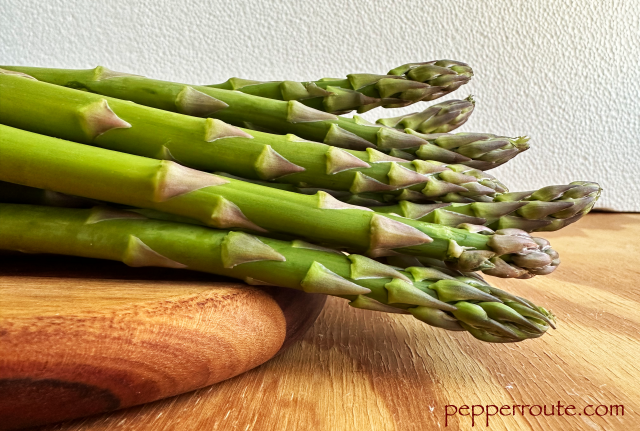
Asparagus… the harbinger of spring

The tender delicate shoots of asparagus start appearing at the beginning of spring. It is one of the earliest of spring vegetables that show up on store shelves. 

Only the fresh shoots of the asparagus plant are eaten by humans. In fact, the small red fruits of the plant are toxic to humans and pet animals. 

The asparagus plant is very pretty with feathery leaves (which are actually not leaves but tiny stems) and small off-white flowers. They are sometimes grown as garden plants and used in flower bouquets for their looks. The root of certain species of asparagus (shatavari) is used as medicine. 

Asparagus has completely separate male and female plants (being dioecious) and male plants are considered better for cultivation as they produce bigger shoots and more of them.

Asparagus has been cultivated since Roman times and was included in spring festivals as a symbol of fertility. Native to Eurasia, today they are cultivated all over the world. 

Being a perennial plant, the same plant will produce shoots for many many years. Usually shoots are harvested starting in the third year of the plant’s life as it needs time to establish a spread-out root system from which the shoots are pushed up. During fall season, the plant starts to wilt and die and roots go into dormant stage for the winter. Come spring, the cycle starts again with the new shoots.

The older well established plants produce fatter shoots which are tastier and better for cooking.

Asparagus shoots come in green, purple and white colors. While the purple variety is a species different from the green, white asparagus is the same plant as the green. The shoots are entirely protected from the sun and grow underground in sandy soil till they are ready to be harvested. If allowed come up above ground, they will turn green as a result of photosynthesis.

Asparagus, especially the white variety, is so popular in Germany that many small villages in the Bavarian region of Germany hold ‘Spargelfests’ (Spargel = asparagus in German) where guests enjoy various asparagus dishes, lots of beer and a big formal evening dance to crown the ‘Spargel Königin’, the Queen of Asparagus for the village. Asparagus from Schrobenhausen in Bavaria is officially recognized by the EU as a protected designation of geographical origin.

Statistically, only half of the world’s asparagus production is used as food. A research team from Munich University of Applied Sciences was able to extract fiber material from the asparagus and make rough paper that can be used for fruit boxes or egg cartons.

Interesting trivia

It is a scientific fact that some sulfurous compounds in asparagus lends a peculiar odor to the pee, commonly known as asparagus pee. Though everyone produces asparagus pee after eating asparagus, not everyone can smell it.

Pan-Roasted Asparagus Soup


An easy to make soup that brings out the full flavor of the main ingredient.

Ingredients

  • 1½ pounds asparagus
  • 1 large leak
  • 1 medium yellow potato
  • 2 tablespoons olive oil 
  • 10 fresh tarragon leaves
  • 4 cups chicken or vegetable stock 
  • 1/2 cup sour cream
  • Pinch of cumin seeds
  • Salt and pepper to taste

Directions

  • Break off the top 1 inch of the asparagus stalks and set aside. Break off the woody bottom part of the asparagus and discard. Chop the remaining middle part of the asparagus into 1/2 inch pieces.
  • Peel and cut the potato into small pieces.
  • Thinly slice the white part of the leek crosswise.
  • Heat the oil in a deep skillet and add the sliced leeks. Cook them , stirring occasionally, till they are soft and starts to brown along the edges.
  • Add the chopped asparagus and tarragon. (If you do not have fresh tarragon, you can use 1/2 a teaspoon of dried.) Raise the heat to high, and cook till the asparagus gets partially browned. 
  • Add the broth and potato pieces. Bring to a boil.
  • Season with salt and pepper, reduce heat and cook on simmer till the asparagus and potato pieces are very soft, about 20 minutes.
  • When done, take the pot off the heat and using an immersion blender, blend thoroughly. 
  • Return the pot to the stove. Add the reserved asparagus tips and cook over medium low heat for 10 more minutes. Adjust seasoning.
  • Meanwhile crush the pinch of cumin and mix with the sour cream. 
  • When ready, pour the soup into serving bowls and garnish with a dollop of cumin sour cream. Serve right away.

U is for Udon Noodle Soup

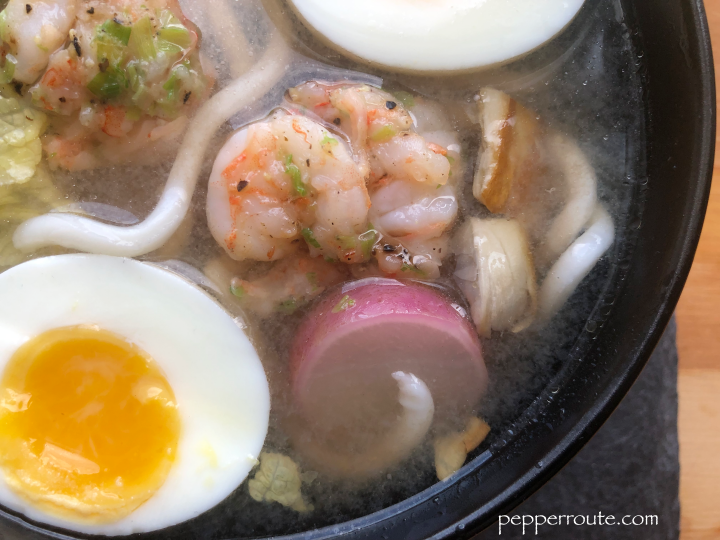
Udon noodles are a popular food in Japan, especially in the southern parts of the country. Made with basic ingredients like wheat flour, water and salt, they are thicker than the regular noodles, and can be round or flat. Usually made into soup, udon can be enjoyed in hot or cold preparations. I’ve made this recipe of udon noodle soup with shrimp balls and a mix of vegetables.

Udon noodles have their origin in China. Legend has it that a monk from Kagawa on the Shikoku island went to China in the 7th century, for studies. When he returned to Japan, he brought back the recipe for udon noodles  which was common in China at that time. It is also mentioned that a stone relic in the Takinomiya Tenmangu shrine, called the Ryutoin-ato, marks the location where the first udon was made in Japan.

Fun fact: The dough for the udon noodles is tough and difficult to handle. So it is stomped on to make it pliable. 

Most of the Japanese soups have dashi as their base. Dashi is made from bonito (skipjack tuna) flakes or kombu (edible kelp, a large brown seaweed), or both. I used instant dashi powder (available online and in some east Asian grocery stores) for this recipe.

This soup is a delightful melding of flavors. Starting with the dashi which makes a lovely broth, and the shrimp balls flavored with ginger, garlic and scallions, to the sautéed mushrooms and the still crisp snow peas and radishes, it is totally enjoyable. And the boiled eggs provide a creamy satisfying rounding off of the flavors. And it is rather easy to put together, including making the shrimp balls.

This soup is a complete meal that includes protein, starch and vegetables. Usually it is served with just hot mustard on the side.

U is for Udon Noodle Soup

Difficulty:BeginnerServings:2 servings

Ingredients

    For shrimp balls

  • For the soup

Instructions

  1. Using a food processor (or a chopping board and heavy knife), chop together ginger, garlic, scallions, and 6 of the shrimp, adding 1 teaspoon of rice vinegar to moisten.
  2. Cut the remaining shrimp into small pieces and add to the chopped mix. Season with salt and pepper.
  3. To the mix, add the cornstarch and enough of egg white to hold the mixture together.
  4. Form into uniform small balls and set aside.
  5. Heat the oil in a pot and add the mushrooms. Fry till light brown.
  6. Add 4 cups of water to the pot and bring to a boil Drop in the sliced radishes and the instant dashi powder. Cover and cook.
  7. When the radishes are cooked, in about 10 minutes, add the snap peas and cabbage. Continue to cook for two minutes. Season with salt and pepper.
  8. Bring the heat down so that the liquid in the pot is on a slow simmer. Carefully add the shrimp balls to the pot and allow to cook for 3 minutes without disturbing.
  9. Add the cooked noodles and carefully mix together. Continue to cook for 3 more minutes.
  10. Take off the heat and serve in two bowls. Place two halves of boiled egg in each bowl.
  11. Serve with hot mustard or any other chili sauce on the side.
Keywords:Japanese, Shrimp, Udon soup
Bouillabaisse

B is for Bouillabaisse

Fish soup, anyone? Likely, you may not get many responses to that. Change the name to Bouillabaisse and it becomes an inviting dish with all the allure of French cuisine! So much for the power of words!

For that is what bouillabaisse is. A basic broth with vegetables and seafood. 

The name is composed of two words meaning ‘to boil’ and ‘to simmer’, supposed to describe how the dish is made. 

Bouillabaisse has its recorded origin in Marseille, being made by local fishermen using the bony fish which could not be sold to customers. The types of fish considered essential were rascasse, sea robin, and European conger. These are fearsome looking fish indeed, as seen from pictures on the net. 

An article in the New Yorker magazine ‘The Soul of Bouillabaisse Town’, by A. J. Liebling and published in 1962, talks about the importance of rascasse for a bouillabaisse and the search for it in the US. A very interesting read indeed. 

By and by there were so many versions of bouillabaisse in Marseille alone that in 1980 a Bouillabaisse Charter was drawn up by a number of prominent Marseille restaurateurs, defining the ingredients and method of preparation of this dish.

The identifying flavors of a bouillabaisse today are fennel and saffron. 

All ingredients except for the seafood are cooked in stock to form a delicious broth, which gets its beautiful color and enticing aroma from the saffron.

The vegetables are chopped small so that they blend well into the broth.

You can make your own stock. Any combination of fish bones and shrimp/ lobster shells will work for the stock. Just boil them up for about 30 minutes, in sufficient water with some garlic, celery, onions, black pepper – whatever you have on hand. Cool, strain and freeze, and there it is ready anytime you need it. I find using shrimp shells for the stock the easiest.

When making a bouillabaisse, I totally take advantage of the versatility of bouillabaisse and use pretty much any combination of white fleshed fish and shellfish. And any variety of scallops. Yum!

To serve, you can remove the seafood from the broth after it is cooked and serve them separately on a platter. I prefer to keep them in the broth to be ladled out into the soup bowls.

Bouillabaisse is traditionally served with thick slices of bread and a rouille made of olive oil, garlic, saffron, and red peppers. Cayenne can also be added to the mix to add an extra kick.

B is for Bouillabaisse

Difficulty:IntermediateServings:4 servings

Ingredients

Instructions

  1. Soak saffron in a spoonful of stock or water. Set aside.
  2. Heat oil in a largish pot or deep skillet on the stove top.
  3. Add onion, garlic, celery, carrot, potato, and fennel to the hot oil.
  4. When the onion starts to turn transparent, add the stock, tomatoes and saffron (with the soaking liquid) to the pot.
  5. Season with salt and pepper and continue to cook.
  6. When the vegetables are cooked, reduce the heat to a simmer.
  7. Add the fish to the pot and cook for two minutes.
  8. Add the shrimps and continue cooking for another two minutes.
  9. Add the clams/ mussels and cook till they open, about three to four minutes.
  10. Add the scallops and immediately turn off the heat.
  11. Serve hot along with slices of bread and the rouille.
Keywords:Bouillabaisse, Dinner, Fish, French, Soup, Seafood

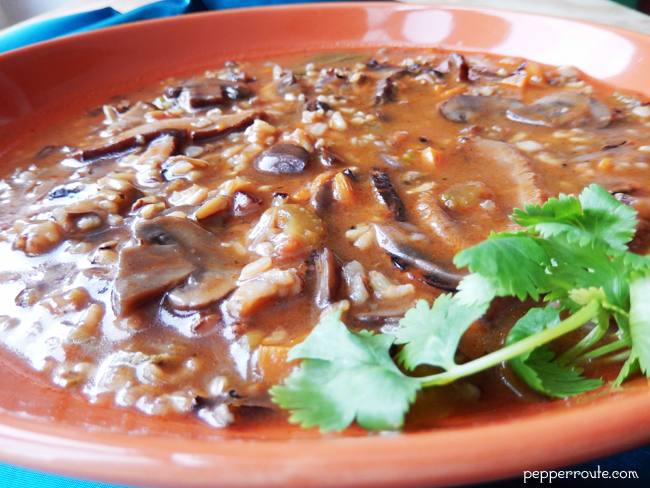
Mushroom and Wild Rice Soup

The main focus of this soup, the key flavour that dominates, is mushrooms. Their earthy, woody flavour stands out and if you like mushrooms, you will love this soup!

 
MWRS-closeup2
That is one thing about mushrooms… you either love them or hate them. In biological taxonomy, mushrooms are classified as a kingdom, ‘fungi’, separate from plants and animals. Actually, the mushrooms that we see are the fruiting parts of the fungus. The common name of mushrooms is toadstools, though no one uses that name these days.


While reading about mushrooms, I was a bit surprised to find that genetic studies have shown that fungi are more closely related to animals than to plants. No wonder many vegetarians do not eat mushrooms!


Humans have been known to use mushrooms as food for a long time. Also, they have been used as leavening and fermenting agents in food preparation.


There are so many varieties of mushrooms, both cultivated and growing wild, in different sizes and shapes and colours. The most common variety available in the markets will be the white button mushrooms which are widely cultivated commercially. Shiitake, portobello, oyster, cremini, chanterelle… these are other common varieties used in cooking.


One of the most expensive food items in the markets today, truffles, are a variety of mushrooms that do not sprout above ground. Highly prized by chefs the world over, they have been known since ancient Roman times. Trained pigs and dogs are used in hunting for truffles growing below the soil surface.


There is a branch of biology devoted to the study of fungi, known as mycology.

 
MWRS-done1
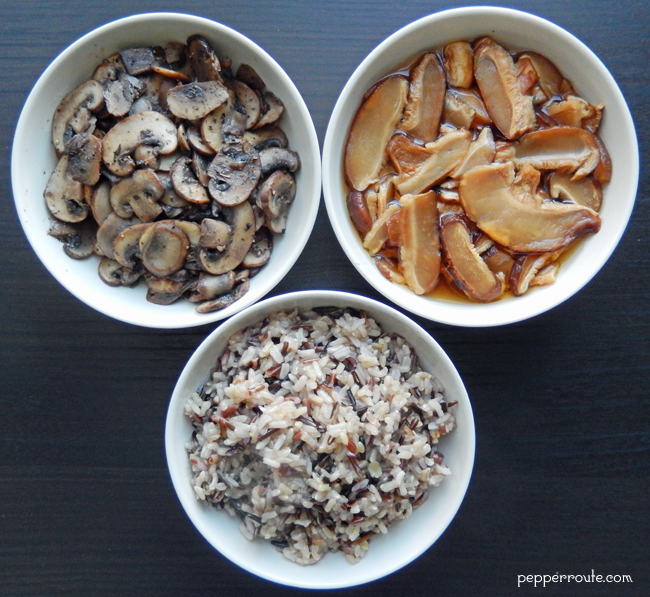
Enough about mushrooms… let’s talk about the soup. I wanted to make it a real mushroomy soup and used two types of mushrooms in it… fresh sliced baby portobellos and dried shiitakes. The water in which the shiitake has been soaked, should be added to the soup as well.

 
MWRS-ingredients1
If you do not want the intense mushroom flavour, you can omit the dried shiitake, which is the stronger flavoured variety, and use just the portobellos. Or even use white button mushrooms instead.

I have used a wild rice mix for this soup. Instead, if you prefer, you can use either quinoa or barley with very tasty results. Whichever grains you are using, you have to cook it separately before adding it to the soup.

 
MWRS-ingredients2
The main part of the preparation is the chopping of the veggies. Once that is done, the rest is easy.

 
MWRS-closeup
I have used chicken stock as the base, as I love the chicken-mushroom combination. If you want to keep this as vegetarian, you can use vegetable stock or just plain water. However, in the light of the studies mentioned above, I don’t see much point in that! 🙂

 
MWRS-done2
A very versatile and tasty soup, that can be enjoyed regardless of vegetarian or non-vegetarian!

~Ria


Mushroom and Wild Rice Soup
Ingredients
  • ½ cup wild rice mix
  • 2 bay leaves
  • 1 cup baby portobello mushrooms
  • ½ cup dried shiitake mushrooms
  • 1 large red onion
  • 2 stalks celery
  • 2 medium sized carrots
  • 4 cups chicken stock
  • 4 tbsp tomato paste
  • 1 tsp dried herbs (mix of thyme, basil, and parsley)
  • 2 tbsp olive oil
  • Salt and black pepper to taste
Directions
  1. In a small pot, bring one cup of stock and one cup of water to boil.
  2. Add the wild rice, bay leaves and enough salt. Cover and cook on medium heat, till tender.
  3. Soak the shiitake mushrooms enough water to cover them.
  4. Slice the onion lengthwise, into thin wedges.
  5. Chop the celery.
  6. If the carrots are slim, slice them thinly; if they are fat, slit them lengthwise and then slice them.
  7. In a large pot, heat the olive oil and sauté the onion, celery and carrots.
  8. When the onion turns transparent, add the tomato paste and continue stirring for two minutes.
  9. Add the remaining stock, mix well and bring to a boil.
  10. Add the cooked rice along with the bay leaves.
  11. Add the soaked shiitake mushrooms along with the soaking water.
  12. Add the fresh sliced mushrooms and check that there is enough liquid in the soup.
  13. Allow the soup to simmer for 20 minutes.
  14. Check the consistency and add more water, if required.
  15. Add the dried herbs and season with salt and pepper.
  16. Simmer for another 10 minutes.
  17. Remove from heat and serve hot.


Red Beans and Green Pumpkin Soup

October is a time of change…
 
Most noticeably, the trees change. What was green till yesterday starts turning into yellows and oranges and bright reds…
 
Temperature goes from warm to cool…
 
Sweaters and scarves begin to emerge from storage…
 
Dawn and dusk move towards each other making days shorter…
 
Early birds start on their migrations south; squirrels get real busy gathering the last of the nuts…
Winds pick up… trying to shake loose the leaves from the trees, getting them ready for the coming winter…
 
Beaches get deserted; movies and malls get crowded…
 
Thermostats go from Cool to Heat…
 
That reminds me of a funny story. Once I was travelling by train to Canada, in the middle of summer. Inside the train, it was freeeezing! Considering the season, all that I had packed were summer clothes. Not a single sweater or jacket in sight! Finally, I approach the conductor and request that the thermostat be turned up a bit. And she goes… “This train has only two settings; heat or cool. Now it is on Cool. And you know what will happen if I turn it to Heat. Do you want me to get beaten up by the other passengers?” Of course, with a smile. The question that came to the tip of my tongue was, “So you think I can’t beat you up?” but considering that I had to spend a few more hours on the train, I pushed that question right back down. And went back to my seat to look at the warm outside world passing by my window, shivering all the time… Did not made that mistake again; Canada always finds me arriving with a jacket, even at the height of summer!
 
But I digress… we were talking about changes…
 
Octoberfest and pumpkin ale reign supreme before making way for robust red wines…
 
RBGPS-closeup2
And the produce… oh boy, what an abundance of pumpkins and squashes… In all shapes and sizes and colours. The market is so full of them. And they make such wonderful displays. And so many ways of cooking them!
 
RBGPS-done1
Before the ripe, orange pumpkins in their varieties get to the market, there is a small window of time when, if you are lucky, you will come across the green ones, likely in a farmers’ market. They are nothing like their later selfs; these are more akin to potatoes in their mealy texture. Though you can cook pretty much anything with them, they excel in soups and stews.
 
RBGPS-done2
This soup is a quick and easy one. Starting with a base of Mirepoix, you build the soup by simply throwing things into the pot.
 
RBGPS-pumpkin
I have used a banana pepper as well, just for the reason that it was sitting lonely in the refrigerator and I did not have any other use planned for it. That is precisely how my recipes grow most often. 🙂
 
RBGPS-ingredients
Among the spice mix, I’ve added a bit of chilli powder which is totally optional. Also, you can either soak dried red beans and boil them or get them out of a can. Tastes equally good either way.
 
RBGPS-in-the-pan
Once you have sautéed the chopped stuff, you will have to move it to a large pot, or start with a pot in which you can do the sautéing as well.
 
RBGPS-closeup1
A hunk of crusty bread is all you need to make a great meal!

~Ria

Red Beans and Green Pumpkin Soup
 
Author: 
Recipe type: Soup
Ingredients
  • 2 lb green unripe pumpkin, cut into ½ inch pieces
  • 2 cups cooked red beans
  • 2 red onions, chopped fine
  • 2 ribs celery, sliced thin
  • 1 carrot, slit lengthwise and sliced thinly
  • 4 cloves garlic, sliced thinly
  • 1 cup chopped tomato
  • 2 tbsp tomato paste
  • 1 bay leaf
  • 1 tsp dried thyme
  • 1 tsp dried oregano
  • ½ tsp cumin
  • ½ tsp chilli powder (optional)
  • 1 tbsp cooking oil
  • 1 small bunch cilantro (coriander leaves), minced
  • Salt and black pepper to taste
Directions
  1. In a large pot, heat the cooking oil and sauté the onion for 3 to 4 minutes.
  2. Add celery, garlic and carrot and continue sautéing for another 3 to 4 minutes.
  3. Add the red beans, tomato paste, bay leaf, thyme, oregano, cumin and chilli powder, if using. Stir together.
  4. Add 5 cups of water to the mix and bring to boil.
  5. Add the pumpkin pieces and chopped tomato.
  6. Season with salt and pepper.
  7. Cover and let simmer for 20 minutes.
  8. Adjust seasoning and add the minced cilantro.
  9. Remove from heat and serve hot with crusty bread.